

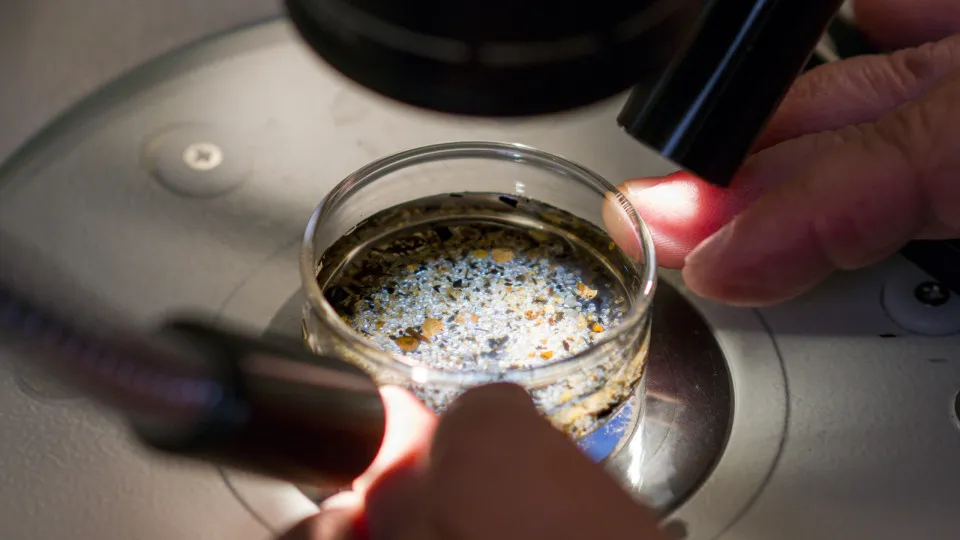



A new study, to be published in full in the May 2026 issue of Bioresource Technology, suggests that certain foods may help the body eliminate microplastics, as concerns grow over their impact on human health. Microplastics are small enough to enter cells and circulate in the bloodstream, making their removal a growing focus for researchers.
The study highlights kimchi as a potential aid, finding that its lactic acid bacteria can bind nanoplastics in the intestine, helping them pass through the body more effectively. Researchers have also pointed to okra and fenugreek as promising alternatives, with experiments showing they can cluster microplastics together in water, making them easier to separate.
Microplastics are everywhere. They've been found in the most remote of places; in marine animals who live in the deepest ocean trenches, buried in sea ice in the Antarctic, and in drinking water all over the world. These fragments are spread through a number of different channels, and now they're being found inside the human body, too. As contamination becomes unavoidable, it's time to learn and fully understand the effects of this pollutant on both the environment and our physical health.
Click on the following gallery to discover the dirty truth about microplastic pollution.